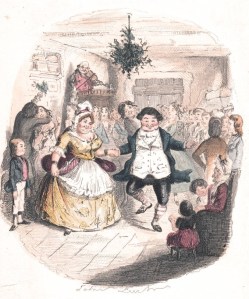
I love Christmas. I love everything about it: the music, the lights, the mince pies and Christmas pudding, planning all the Christmas entertainment, even buying the presents. I love a Christmas film, and always tune in for the TV Christmas specials. And of course, Christmas in a favourite book is best of all.
These days, there is a huge market for Christmas fiction. It seems to have become a genre all of its own – Christmas specials of bestselling series, Christmas romance, Christmas nostalgia, even Christmas crime! I guess we have Charles Dickens to thank (or blame, depending on your perspective) for the popularity of Christmas Fiction. It’s hard to imagine that such a thing just didn’t exist before Mr Dickens penned A Christmas Carol. However, I would say that the current trend is a resurgence in the popularity of Christmas fiction, as there was none of this around when I was growing up. Even when I worked at the bookshop, there wasn’t this plethora of Christmassy fiction. We would order in the classics such as A Child’s Christmas in Wales by Dylan Thomas, John Julius Norwich’s The Twelve Days of Christmas, to display alongside the Delia Smith Christmas cookbook and celebrity biographies. Only very young children got specialised Christmas books, with short, beautifully illustrated story books featuring Father Christmas or traditional tales. Back then, maybe the publishers just couldn’t see the point of publishing a book that would only sell in December.
I probably would have loved all this Christmas fiction when I was a young reader. If I needed a Christmas fix, I had to turn to novels that featured an episode set at Christmas. Enid Blyton set just one of her Famous Five books at Christmas, Five Go Adventuring Again. The adventure-loving children are home for the Christmas holidays and the deep snow adds an extra layer of difficulty to their crime-solving. As I got older, another author who could be relied upon for a decent dose of Christmas spirit was the wonderful Sue Townsend in her Adrian Mole books, even if poor Adrian’s Christmases never quite lived up to his expectations. I loved the lists – the presents he was going to buy for his family, the presents he hoped to receive, the reality of the presents he did actually get. As an adult, I would turn to Jilly Cooper. Dame Jilly recreates the seasons so well. Her classic novel Polo does Christmas twice. Once in the traditional English middle-class home, with dinner cooked in the Aga and chaos amidst the presents, and later amongst the Florida super-rich, with gourmet dinner party food for dinner and stylish, colour-themed decorations round the pool. Of course, there was always Dickens, but I must admit that I never read A Christmas Carol until I was an adult. It is now something I know intimately thanks to its inclusion on the GCSE English Literature curriculum. This means I usually end up reading it in the summer with the students I work with, but that doesn’t bother me. I have come to appreciate how special it is. It may have been copied and parodied so many times that it has become the biggest cliché of all, but going back to the text reminds me how clever it is, and how perfectly structured. When the kids at school moan about it, I staunchly defend it as the brilliant classic it is. If you’ve only seen the films, or haven’t read it for a while, I definitely recommend giving it another go.
My own Christmases were definitely more Adrian Mole than Jilly Cooper, but I love all renditions of Christmas in fiction. I got to have a go at it for myself in my Advent stories, taking the Christmas spirit to the max, piling up the festive expectations and messages of goodwill. However, I have never put Christmas into any of my novels. In fact, I would say I have deliberately avoided it. But that all changed with Novel Number Six. In this novel, Christmas is a key moment of the story and I decided to give my characters the full Christmas experience. There were several reasons for breaking my usual habit. One is that the action of this novel takes place mainly over the course of a year, during which the teenaged protagonists go through their final year of school, with each holiday playing a different role as their summer GCSEs come closer. I won’t go into details, but the Christmas episode is a turning point in the plot, so I wanted the festive atmosphere to match the significance of the moment. Another reason was that it gave me the perfect opportunity to explore the class differences between my two main characters. The lives of Jay and his best friend Lenor couldn’t be more different, and just like Scrooge observing the Cratchits as they eat their Christmas dinner, Jay and Lenor learn something new about each other over the turkey and presents. As I learnt from Adrian Mole and Jilly Cooper, nothing shows a class difference more than examining how different families celebrate Christmas.
Whatever the practical reasons, I really enjoyed putting the festive wrapping paper on my story. Ironically, I think I first wrote those chapters during the summer, but I love Christmas so much that it wasn’t difficult to conjure up the Christmas spirit. Maybe I put a little bit of all those fictional Christmases into it, combined with my own childhood Christmases and the things I do now with my own family. There is also a very reverential nod to Dickens. Who knows, maybe by next Christmas, you will be able to read it for yourself!

 M J Schofield