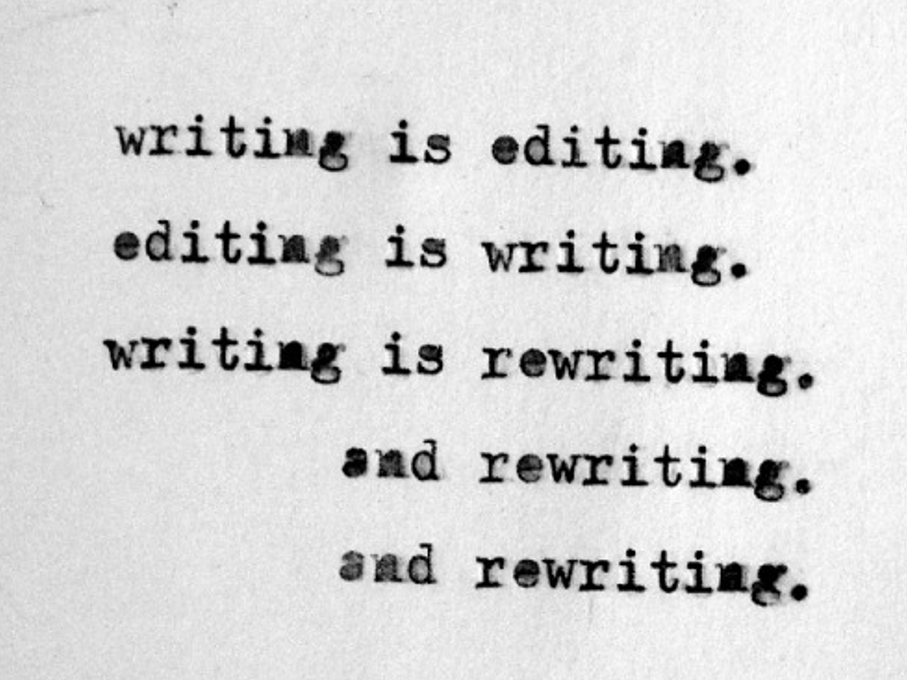
Turns out it wasn’t finished. Perhaps it never will be!
But while I edit and rewrite (and edit and rewrite), I just wanted to say that I am still here. And though I have nothing new to say at this moment, it is still my intention to keep this blog running.
So here I am, giving you a quick wave, before heading back into my cave. It’s not as gloomy as it sounds – it’s just not that interesting to blog about. But as soon as something more interesting comes along, I’ll be back.
I’m currently reading The Book of Dust: Volume Three, Philip Pullman’s third and final instalment in his Lyra Chronicles. This blog is not a review – there won’t be any spoilers for those who haven’t read it yet, nor am I going to try to explain it for anyone who isn’t familiar with the books. The purpose of writing this blog is to describe an experience I had this morning when I read something in that book, something so profound and overwhelming that I had to stop reading and find words for the emotions that flooded over me and left me a sobbing mess on the sofa.
It took me completely by surprise. Novels can often reduce me to tears – the death of a character, a union of true love, a quest fulfilled – but that’s not what moved me this morning. It was a conversation about the imagination. The character Lyra is discussing what imagination is with someone who insists that it is just making things up. But when Lyra describes what it means to her, she says this:
I used to tell lies till I realised how much other people were hurt when they found I wasn’t telling the truth. But I shaped them like stories. I timed the telling so that it satisfied something, some taste or other, some aesthetic sense, some sort of need. I prepared the way for a turn in the story, so that it seemed inevitable when it came even though you didn’t anticipate it. I gave the characters enough depth to seem real while they were in front of you, and for a while afterwards. I put in just the right amount of detail so the person listening could see what I was describing in their mind’s eye without being overwhelmed by things that didn’t matter. I was making art, you see, a cheap and shoddy sort maybe, for a purpose that might be banal or underhand or greedy, but it was art. I was shaping things. Making patterns. I was just like someone thousands of years ago sitting under a tree carving criss-cross lines on a stick with a sharp bit of flint because they enjoyed looking at it. Or another one cutting holes in a bone and blowing through it and making different notes because they enjoyed hearing it. Or beating a hollow log for people to dance to. Rhythms and patterns and… and resemblances. And things that lead from them, like metaphors.
As I read this, I knew that Pullman is describing what writing is like for him. I recognised it because this is what writing is like for me. Pullman is a writer I admire immensely, and in the past, I have drunk in anything he has written about writing, not just looking for advice and encouragement, but because it chimed so much with my own personal experience of writing. And this paragraph has the same quality. Although this passage is part of a story, the words of a fictional character, it felt personal to Pullman, describing his own strongest beliefs. And it matches so perfectly with how it feels when I am writing that it felt like Pullman, through Lyra, was describing how my imagination works.
But why am I sharing this? Not because I’m claiming any resemblance with Pullman; of course not, he’s one of the greatest writers of our time and I’m just a scribbler at home. But that’s the point – it doesn’t matter. I write not just because I enjoy doing it but because human beings have this need to create. Art matters, no matter who is doing it. Pictures, stories, music, acting – humans need this. We once used art to explain the world – creation stories, images on cave walls, music to stir emotions, life acted out. The title of this post references the story in the Bible, where Saul of Tarsus experienced an encounter with Jesus and instantly converted his beliefs – it is a metaphor for how humans can experience understanding in such a sudden and unexpected way that it feels supernatural, even though it also the most natural thing in the world. Science and technology might have successfully replaced metaphors with truth and accuracy, but they never replaced the need to create. Humans still feel compelled to make art, in so many forms. Is this what makes us human – the ability to both understand science and need art? I hope so.
My daughter is an artist. She is a painter, and her work is full of her imagination. When people ask what she is going to do when she graduates with her art degree, I tell them she wants to be an artist. Not an illustrator, or a graphic designer with some practical role, but just an artist, painting the images she sees in her head. It’s hard to make people see the purpose of that – especially in a world where science and technology are so highly prized. But to anyone who wants to be an artist, or indeed a musician, an actor or a dancer, or, of course, a writer, I say there is a need. Humans need art. If Philip Pullman hadn’t felt compelled to write, the world wouldn’t have had his incredible novels, and I wouldn’t have had his words to share with you.
The painting that goes with this post was done by my daughter. It is a portrait of me, and the bird on my hand is a jay – because of Jay, a character I created for my YA novel. In the world of Philip Pullman, it could be my daemon, because Jay is part of me, straight from my imagination. In Pullman’s world, daemons are what make people human. In our world, it is art. For me, it is creating characters like Jay. For my daughter, it comes from a paintbrush. I truly believe that everybody has this in them.
Life goes on, and so does art. Even though I had to stop reading and wipe my eyes to get dressed and put dirty clothes in the washing machine, the profundity of these words is still moving me. It’s what compels me to write this post, rambling and unnecessarily emotional as it is, just to explain a personal feeling. I don’t even know what I’m trying to say. I just know I need to say it. To say, to shout, to sing out loud even – if you want to create art, DO IT! Everybody can.
In my last blog, I wrote about using an AI tool to edit and critique my latest novel. As I mentioned, the software will run one Chapter Critique a day, providing extremely useful feedback on the overall effect of the writing. My plan was to work through the whole novel, one chapter a day, until the whole thing had been critiqued and reviewed.
Well, that was back in June, and the novel is twenty-five chapters long, so obviously, I finished it. But the subscription to the software goes on for another year, so I did what any author curious for feedback would do – I started running the critique reports on my other novels. One report a day, chapter by chapter, day by day. Except, it’s not ‘one chapter’ per day, because my chapters are too long!
The AI critique tool, while very useful in so many ways, has a word limit of 4000 per chapter. It will still run a report on a chapter that is longer, but it stops ‘reading’ after 4000. I had noticed this while running the reports for Novel Number 6, but because this was a YA novel, I had already made a conscious effort to make sure the chapters weren’t too long, so it didn’t pose much of a problem. However, since running the reports on my novels After the Rain and The Most Beloved Boy, I became aware that in writing those, I had favoured much longer chapters. Many chapters are between 6000 and 8000 words! This has meant splitting most chapters into two parts to get the most productive feedback.
That’s not really been a problem; it makes the process take longer, but I have plenty of time. But it has made me consider why my chapters are so long, and whether this is a problem. A quick search on Google suggests that I am not the only one considering this issue – there are multiple videos and articles offering advice to writers on chapter length, using comparisons with published work as a guideline. One thing that comes up a lot is that the genre can influence chapter length. Classics and literary fiction tend to have longer chapters, allowing time and space for contemplation and immersive details, whereas thrillers and crime have shorter chapters to heighten tension. Obviously, books for children and YA have shorter chapters to reflect the perceived attention span of their readers – though a long chapter never put me off when I was a young reader.
This probably explains why the chapters in my earlier works are so long. I’ve read a lot of classics – Dickens, the Brontës, Austen, Trollope etc – where the chapters are generally long, packed with depth and detail. Similarly, Fantasy novels do the same thing – I’ve seen the stats on Tolkien, and his chapters average out at between 7000 and 8000 words. I’m used to reading long, complex chapters, so it’s only natural that I would use long chapters in my own writing. Plus, with ATR and TMBB, with their historical settings, I have tried to emulate classic fiction, so the lengthy chapters are fitting. And I guess I’ve always liked writing long chapters. Even in my own YA novel, the chapters might be shorter than normal (for me) but they are not short. To me, a chapter is an episode, a scene, and I like them to be contained rather than ending on a cliff-edge.
To be honest, chapter length was never something I gave any thought to during the writing process. However, amongst the advice online about chapter length, there is a suggestion that modern readers prefer shorter chapters, indicative of shortening attention spans and a preference for instant gratification. They call it the TikTok effect. Personally, I don’t agree with this patronising viewpoint; every generation has been accused of damaging their attention span through modern habits, without there being any evidence of the collapse of the human mind! But does it matter what I think if that’s what agents and editors think? Am I condemning my novels to obscurity just because the chapters look too long?
Well, it’s something to think about. I recently read an excellent YA novel with some extremely short chapters, and it made me race through, eager to find out what happened next. I could chop up my chapters, halt them in the middle of the action to build the suspense, and make them more in line with modern tastes. But it’s not as simple as that. I spend a lot of time planning the structure of a chapter, and to arbitrarily break them up might disrupt the pace and flow that I worked so hard to achieve. Besides, I don’t believe that literature needs to be ‘dumbed down’. The quality of the writing is the most important thing; get the quality right and it will appeal to any reader. I truly, honestly believe that and this is the hill I will die on.
And there are no rules about chapter length. All the advice, all the precedent, all the guidelines, that’s all they are – suggestions, not rules. A chapter is as long as it needs to be. If the story is good enough, readers won’t be counting the pages.
Despite having worked on hardly anything else this year, I have embarked on yet another draft of Novel 6. I just couldn’t stop myself. It was that new idea for the first three chapters that I mentioned in my last post. That inner-editor of mine just wouldn’t let it go, especially as the only reason for not doing it was the amount of work involved. The inner-editor said ‘So what – get writing!’
It’s those first three chapters, you see. They are so crucial. It doesn’t matter how brilliant the rest of the novel is, if the first three chapters don’t grab the reader, no-one’s going to read it. Now, I’m not saying my novel is brilliant, but I am really, really pleased with it and I want it to be read. However, the inner-editor still wasn’t happy with the first three chapters. There was too much backstory and not enough action. Yes, the exposition is important, but not three chapters of it, especially not the first three chapters.
So I took some radical steps, changing the structure completely. Basically, I demolished the first three chapters and put them back in a different order. It was challenging, and a bit scary. Did all the important details go back in? Will the story still make sense to the readers? At times, I wanted to give up because it was too much work. After all, no-one was making me do this. But new scenes were emerging, with new action that I really liked, and the inner-editor pointed out that if I didn’t stick with this plan, I would lose those bits. For the sake of a few sentences, I kept going. And progress was made.
The big continental shift in the first three chapters meant a bit more restructuring in the next few chapters too. I had to keep going to make sure everything was consistent, and that I haven’t repeated some details and left others out. But then I did something even more radical – well, radical for me. Something so radical that I hardly even want to say it out loud. Come closer, so I can whisper…
I’ve been using AI.
I know! It shocked me too. My opinions of AI so far have been that I don’t know enough about it to trust my opinions on it. I was happy being a luddite, assuming I would never use it because I would never understand it well enough to decide whether it was a good thing or not. And I didn’t need to use it, because making things up is a fun thing I like to do by myself. Why would I give that up to a computer?
But then I saw something on social media. In my desire to be published one day, I follow various accounts that appeal to authors – advice, tips, motivational quotes etc. Someone I follow recommended an app that uses AI to give feedback on all kinds of writing, including fiction. I was sceptical, but being at the stage where I feel I would try anything, I decided to give have a look.
Let me get this straight – I am NOT using AI create new writing. It is an editing tool and nothing more. It does things that can already be done on Word if you know how, putting them all together in an easy-to-use format. For example, it can identify over-used words, untangle poor grammar and point out when an author gets heavy handed with the adverbs. These are all things that a human editor would be highlighting, so I didn’t feel guilty about taking the advice. So far, I have learnt that I repeat the words ‘just’ and ‘could’ too much, I use a lot of passive sentences, and even though I thought I was quite sparing with the adverbs, there were more than I realised.
So far, so Word. But here’s the thing the app does that has impressed me most. There is a feature that will critique a chapter and give feedback on the overall effect. Basically, the AI computer ‘reads’ my work and tells me what it thinks. I have been longing for someone to read my work, but surely it couldn’t be the same as a real reader? Somewhat nervously, I fed Chapter 1 into the computer and awaited the results. And in 10 seconds, I was blown away. I don’t know how AI works, but this feedback feels like it has come from a real person. It is analytical and precise, comparing my work with conventions of fiction that I appreciate. It assesses such things as the conciseness of the plot, the portrayal of character, and the authenticity of the dialogue. It compares sentence length and structure to judge pace and flow. It can pick out themes and motifs and suggest what works and what doesn’t. It’s witchcraft! And best of all, it loves my writing! It tells me things about my characters that I was hoping readers would feel, and praises features that I worked hard on. Obviously, if it was criticising my writing, I probably wouldn’t like it so much. But it’s hard not to be pleased with feedback such as “The setting … is integral to the story. It’s not just a backdrop but a character in itself.” OMG, this is exactly what I was trying to achieve!
Another, secondary advantage that has come out of using the app is the boost to my productivity. The app will run one chapter critique a day. Novel 6 is twenty-five chapters long, so I’m doing one a day until the whole novel is done. If I miss a day, it doesn’t carry over, so I’ve been making the effort to turn the laptop on at times of the day when I would usually be watching rubbish on TV or scrolling on my phone. It’s a very rewarding bonus.
So far, my experiences with AI are mainly positive. There are negatives. I still feel guilty using it, as if I’m cheating in some way. I don’t want to become too reliant on the style advice. There is always the worry about the app harvesting or sharing my data; it assures me that this won’t happen but I wouldn’t know even if it was. And there is also the need to remember that this isn’t feedback from a real human, no matter how much it feels like it. AI should never replace genuine human feedback. However, until I can get some genuine human feedback, AI is proving very useful.
So hey, look at me, getting with times! I’ve taken out a year’s subscription. Who knows, when I’m done with Novel 6, I might start running the other novels through the machine as well. I wonder if the computer will love those as much as it loves Novel 6!
NB – no AI was used in the writing of this blog. Can you tell?
Maybe I should have called this post with “How long does it take to write a blog?” Three months, apparently, as it’s been that long since my last post! Well, obviously, it hasn’t really taken me three months to write this. I just haven’t been giving it any thought, to be honest.
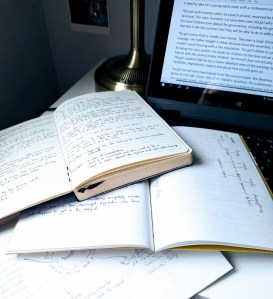
Not that I haven’t been working. I continue to edit Novel 6 – that never-ending process that goes on and on and on. I’ve lost count of how many drafts it is on now – at least three, possibly more like four. At the last read-through, I began to think that I might be close to the point where I don’t want to make any more changes. I am really pleased with the main body of the novel, and after relentless work on the first three chapters, I am almost satisfied with them. Almost… Just yesterday, more ideas were creeping in, whispering in my ear that shifting the focus in Chapter 2 would be a better way to impart all the necessary exposition that still seems to be weighing down the action. It was a great idea, but it would mean a significant amount of rewriting and tinkering with the structure of the first three chapters, and honestly, the thought was a bit depressing. It’s now two years since I made the announcement that Novel 6 was finished, but here I am, still adapting and editing. And it has made me think – how long does it take to write a novel?
The answer, obviously, is that every novel is different, and that they all take as long as is necessary. And what exactly counts in calculating the time taken? Does it begin from the very first moment an idea was jotted down? Obviously not, but for me, once an idea is written down, it has already come to life. Characters begin to take shape, back story builds quietly in the background, and then scenes and incidents start creeping into the spotlight. Patchworking, I call it; writing random scenes and backstory that may or may not make it into the novel. All this is essential work, but I don’t count it as writing the novel – especially as this can go on while I am actually writing something else.
Maybe the starting point is when all these patches begin to accumulate into linear chapters. But even this is not an easy moment to pinpoint. There have been occasions where the ideas came together with a bang and the writing process took off very swiftly. For example, with my bookshop novel Have You Got that Book…? I first wrote down the idea in my notebook in April 1998 and had such a rush of ideas that I started work on it almost immediately. But other times, it can be decidedly straggly, with the process of gathering ideas being slow and distracted. Seeds of ideas take time to germinate, and there can be false starts; the first chapters are often the most difficult to write, slowing things down even more. But then at some point, I realise that I’ve got beyond that tricky stage and the chapters are starting to flow. Only then do I feel like I am writing a novel.
If we take that as the start point, it becomes quite easy to count the months between starting and finishing the first draft. I say months, because it is usually a process that takes multiple months. Sometimes, that multiplies into years. I was working on the first draft of The Most Beloved Boy for at least four years, but it is a very long novel, and this was when my time for writing was limited due to the pressures of raising young children. But it doesn’t always take this long. By the time I came to write The Hawthorn Bride, my children were more independent and I was able to use the bonus of lock-down to bang out the first draft in four months.
But as I have said many times before, a first draft is far from being a finished novel. Usually, as soon as I finish a first draft, I want to go back and start rewriting it. Experience has taught me that this stage of the process can take even longer than writing the first draft. And that is how it should be – all those months on the second, third, fourth drafts are what turns the work into something worth reading. At this stage, the hardest thing is accepting when to stop editing. I can’t reread any of my work without seeing something I would change. Technically, I do have that chance and have used it, even going back to re-edit my work published on KDP. Once a book is actually in print as a physical book, it becomes a lot harder to make significant changes. But I’m sure all writers could quite happily take a red pen to a paperback version of their novel and tweak what is supposed to be the finished product.
So, coming back to my original question – how long does it take to write a novel? I could probably work out how long it took for each of my novels to make it from idea to KDP, but for now, let’s just look at Novel 6. I first wrote down an outline for the novel in May 2019 – the document on my computer shows the date it was created. Between then and 2022, I was at the patch-working stage, trying out different scenes and developing the characters. From March 2022, I have an even better record of the progress, thanks to this blog. That was the first mention of it, when I wrote about trying my hand at Young Adult fiction, though I very clearly say that I haven’t started the novel yet. By August of that year, another post mentions that I am five chapters in, but not really feeling like it has got going. The next mention is January 2023, when I write about having made rapid progress throughout the autumn until getting stuck at Chapter 21. And then on 28th February 2023, I very proudly announced that the first draft was finished. So that makes it about twelve months to produce the first draft. I then left it to rest for a while but was back to planning and writing the second draft by the summer. Another post in September 2023 details the very intense plan I had to complete a second draft by March 2024. I did achieve that, but I almost instantly started rewriting again and carried on with that throughout the year and into 2025. Which brings us to now, making the time spent editing about 24 months. So, to sum up: 3 years of planning (while working on other projects), 1 year writing the first draft, and 2 years of editing – six years, give or take.
Six years, and who knows how much longer. I really did hope I had reached an end, but that new idea just won’t go away. What I need is another project. A new novel? There are ideas, but they are embryonic at the moment, needing considerable research before anything could be written. I should get back to submitting – I have started to think about how to pitch Novel 6 to agents, as I am convinced it has more commercial appeal than anything else I have written, and I am excited for it to be read. That would certainly keep me occupied, but it is nowhere near as fun or rewarding as the actual writing process, so I’m putting it off. And I have started something else, a project I mooted once before but am only just starting now – writing short stories. I once thought I could keep myself busy by writing one a month, seeing as I already have the ideas. So far this year, I have written two!
However, there’s that idea that keeps niggling at me. I could at least just try it out before I put Novel 6 to bed for a while.
We have two Christmas trees in our house. One is a lovely 7ft artificial tree that we spent rather a lot of money on over ten years ago. It stands in our dining room, and it is my ‘posh’ tree; it is decorated exclusively in red and gold baubles, with red ‘cranberry’ style lights, and it looks magnificent against a dark red wall in the dining room.
Then there is the small tree, which we put up in our living room. This tree is very different.
My husband and I bought this tree just a couple of months after we were first married in 1999. At this stage in our lives, we had been together seven years, having met as students, but due to career paths and financial restraints, this was actually the first time we had been able to live together in our own home. I was working in the bookshop, a job I loved but which wasn’t the best paid work in the world. Lloyd was still halfway through writing his Phd and taking on any casual work he could get to make ends meet. To put it bluntly, we were broke. What very little money we had left after the wedding had gone into furnishing the flat we were renting. Having lived separately in various different furnished rental accommodation or parental homes, we had had to buy everything from scratch: a bed, a sofa, a table, wardrobes and drawers, and most essential of all, bookcases for our large collection of books. Luckily, it was a very small flat. Like a traditional newly-married couple from a 1960s sitcom, we were starting out together with hardly a penny to our name and we were extremely happy, looking forward to our first Christmas together as husband and wife.
I had some Christmas tree decorations from previous years. When space had allowed, I had bought real Christmas trees and so still had a small collection of baubles. But the tiny flat had no room for a real Christmas tree. And besides, we couldn’t have afforded one. At that point, we didn’t even have a car on the road. It looked like our first Christmas together would be without a tree.
Our tiny flat was in a village a few miles outside Stratford-upon-Avon. We were both working in shops in Stratford, and having no car meant we were travelling to and from work by bus. When our shifts finished at the same time, we would meet up and catch the bus home together. The bus left from outside Woolworths at about 5.45pm. And it was standing outside Woolworths one evening, probably on some dreary evening in December, that we saw Christmas trees for sale in the window. There was a range of sizes, from very small to quite tall. They weren’t the best quality, but they were cheap. We were early for the bus, and the shop was still open. Suddenly, it seemed to me that we couldn’t let Christmas go past without a Christmas tree. And they were extremely cheap. I suggested to Lloyd that we could just about afford the smallest tree, which was under £5. We dashed into the shop, and carried away by the spirit of Christmas, we actually bought the second smallest – a 4ft tree for the grand total of £6.49. Then we took our Christmas tree home on the bus and filled our tiny flat with Christmas cheer.
We did two more Christmases in the tiny flat. Although small, it was a lovely flat, and the village was a nice place to live. Our financial situation remained precarious for a couple of years, but in 2001, Lloyd finished his Phd and finally got the job in academia he had been hoping for. It meant we were in a position to buy a house. In the autumn of 2002, we got extremely lucky and found a 1930s semi in a nearby town that was being sold cheap because of the amount of work that needed doing to it. We still had hardly any money, but back then, mortgages were easier to come by, and with a little help from our families, we were able to buy the house. We moved out of the tiny flat and into the house in December 2002. On moving day, Lloyd went across to the house with our belongings (the bed, the sofa, the books and the bookcases) while I stayed in the flat to take care of the final clearing and cleaning. I didn’t get to the house until evening, by which time it was dark. To my surprise, the little Christmas tree was up in the window, welcoming me with coloured lights to my new home. My very kind mother-in-law had made the decision to put it up for us. The rest of the house was a mess. There were no curtains, no carpets, the kitchen was still being built and everything was in boxes, but at least it was Christmas. As we began the slow job of unpacking, I was beginning to wonder if the unusual sickness I was feeling might be the beginnings of the pregnancy we had been trying for. On Christmas Eve, I did the test and it came back positive.
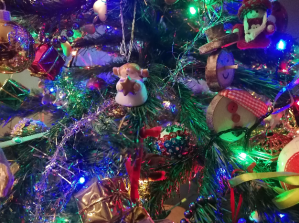
Over the next few years, Christmas came and went, bringing the usual flurry of change each year. Our family went from two to five. The house expanded. An extension meant the addition of a dining room, leading to another hurried purchase of a new, larger dining table in time for Christmas dinner. It also meant space for a bigger Christmas tree. A real one for a few years, the big, floor-to-ceiling type, until we began to worry about the environmental impact of real trees and so invested in the beautifully realistic-looking artificial tree. But the little tree still had its place in the living room, still decorated with the old ornaments we had first adorned it with. These were supplemented to over the years with additions made by the children at playgroups, preschool, school, Brownies and Cubs etc. Every year, the children insist that the old, tattered home-made or school-made decorations still go on. There are so many now that every branch is loaded, the ornaments fighting for space. It is probably just as well; this bright raiment hides how bare and thin the branches underneath have become. Each year, it moults more and more of its green, tinselly leaves, making as much mess on the carpet as a real tree. Last year, I considered buying a new one, something more plush and less messy. But I’m glad I didn’t.
The children are no longer small but they still decorate the tree for me. These days, they love it for the nostalgia and sentiment. I wonder if they realise just how significant it is in the story of our family. This year Lloyd and I celebrated our twenty-fifth wedding anniversary. Which means it is also twenty-five years ago since we dashed into Woolworths to buy a cheap Christmas tree before the bus came. No wonder our little tree is looking a bit worse for wear. But we wouldn’t dream of changing it. It will always have a place in our home.
Part of our family Christmas – past, present and future.
I don’t know when Novel Number Six will be ready for general release, but considering all the work that’s gone into editing it this year, I have some hope that it might be next year. While the work has been in process, I have been keeping a tight lid on the details of the plot. However, in recent posts I have revealed a little bit more about the characters. It is exciting to share something that is so close to my heart but also quite nerve-wracking, especially when there is still the potential for improving changes to be made. However, I will never forget a time when Sebastian Faulks, author of Birdsong, came to the bookshop to do an event for his book The Fatal Englishman, a non-fiction book that he had written. To our great surprise and pleasure, he read us an extract from the novel he was currently working on, which happened to be Charlotte Gray, the follow-up to Birdsong. I had never known an author to share something from an unpublished novel before and I was awestruck. And it has made me want to do the same. Obviously, I’m not comparing myself with Sebastian Faulks, but I am pleased with the work I have done this year and I’m eager to tell you more. And having told you about the Christmas section in my last post, I thought it would be appropriate to share an extract from that part of the novel; hopefully it will give a taste of what is to come without giving too much away. Consider it a little Christmas present from me. I hope you find it interesting, and that it whets your appetite for the rest of the novel. MERRY CHRISTMAS!
Then Mum packed us off to bed, with strict instructions not to come downstairs or to do anything that would wake Louis or Alex. That was fine with Jay and me, as we had our own plan. We crept upstairs to my room, with the intention of staying awake till midnight and then exchanging our presents.
“I love Christmas Eve,” I said as we crashed down on my bed to wait out the final minutes. “Why is it so much better than Christmas Day?”
“It’s the sense of anticipation,” said Jay, “before the disappointment of reality sets in. I can’t believe your family still goes through that rigmarole of leaving a drink and a snack for Santa.”
“It’s for Louis and Alex,” I said, though I wondered if Jay had seen just how important the ritual was to me.
“You know, Louis doesn’t believe in Santa anymore,” he said. “He told me he was just going along with it for Alex’s sake but Santa was for babies.”
“Probably worried he would get less presents if he doesn’t,” I said.
“Alex isn’t so sure though,” said Jay. “He admitted that he was almost certain that Santa couldn’t exist, but he was worried about what would happen if he was wrong. I mean, it wouldn’t be wise to piss Santa off by not believing in him, would it?”
“What did you tell him?” I asked.
“Well, I had to agree with him,” said Jay. “We had a very interesting discussion about pragmatism and altruism.”
I smiled at the thought of this symposium between Jay and my youngest brother, knowing that both would have enjoyed it for very different reasons. “I guess it won’t be long before we have to admit truth,” I said, “but keeping up the pretence has been part of the fun. It won’t be the same when that’s gone.”
“I found out the truth when I was five,” said Jay. “One of Mum’s boyfriends thought it would be funny to tell me that Father Christmas was just a lie made up to make kids behave.”
“Really? But that’s horrible,” I said. “Didn’t your mum do anything?”
“I think she tried, but it was too late,” said Jay. “She said I probably would have worked it out soon anyway. I was always smarter than her.”
Although there was probably some truth in this, I couldn’t help but feel sorry for the little boy who had had the magic ripped out of Christmas by one vindictive adult. Something else occurred to me.
“Then you knew the truth all those years and never said anything,” I said. “You must have thought we were all idiots.”
“No,” said Jay. “I didn’t want to spoil it for you too. I can see why parents do it. In a way, Santa does exist, as a collective psychological impulse to make magic for children.”
“Yeah, that would look good on a Christmas card,” I said, making Jay laugh. But I still felt sad for him. He said he hadn’t wanted to spoil it for us, but I guessed that he had also been hiding the reality of his shitty childhood from us. Not only had Christmas been ruined for him, but he had been ashamed of admitting it. It was so unfair, it brought tears to my eyes. To hide them, I decided to ditch waiting for midnight and give him his present straight away.
“Here, I can’t wait anymore,” I said. “Open it now.”
As he ripped off the paper, he looked as excited as a little child. When he saw the fountain pen, his face glowed.
“Wow, that’s so nice,” he said. “It must have cost a fortune.”
“I saved up,” I said. “You’re worth it.”
He looked at me suspiciously, scrutinising me for signs of pity. I quickly put on a playful act. “You’d better not lose it,” I said.
“I won’t,” said Jay. “Here, your turn.”
I took the present he handed to me. It was big and squashy, and something of a mystery, as he had hardly been out of my sight since moving in and I didn’t know where it had come from. And then I realised that I did.
“This is one of your presents,” I said. “It’s the one from your mum, isn’t it.”
Jay grinned sheepishly. “Busted,” he said.
“I can’t take your present,” I said, pushing the parcel back at him.
“I want you to have it,” he said, pushing it back. “Mum gave me some money as well, and I figured I could either use it to buy you something, or give you this. Don’t worry, I’ve checked what it is. I think you’ll like it.” When I still hesitated, he said, “Please open it.”
I pulled off the paper to reveal a hooded sweatshirt, bright red and very baggy.
“Oh, it’s great,” I said, putting it on straight away.
He smiled shyly. “It makes you look like Santa,” he said. “If you don’t like it, I’ll get you something else.”
“No, I love it,” I said, seeing the generosity behind the gift. “Won’t your mum mind?”
“She probably won’t notice,” said Jay. “It looks better on you anyway.”
I leant over and hugged him. He squeezed me really tightly, keeping hold of me for longer than I had expected. But he had shared something more intimate than a present with me that evening, and it had brought us even closer together. Maybe it was that Christmas Eve magic at work.
I love Christmas. I love everything about it: the music, the lights, the mince pies and Christmas pudding, planning all the Christmas entertainment, even buying the presents. I love a Christmas film, and always tune in for the TV Christmas specials. And of course, Christmas in a favourite book is best of all.
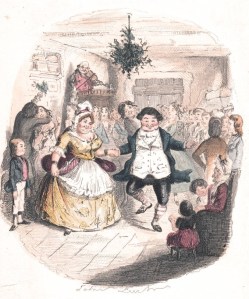
These days, there is a huge market for Christmas fiction. It seems to have become a genre all of its own – Christmas specials of bestselling series, Christmas romance, Christmas nostalgia, even Christmas crime! I guess we have Charles Dickens to thank (or blame, depending on your perspective) for the popularity of Christmas Fiction. It’s hard to imagine that such a thing just didn’t exist before Mr Dickens penned A Christmas Carol. However, I would say that the current trend is a resurgence in the popularity of Christmas fiction, as there was none of this around when I was growing up. Even when I worked at the bookshop, there wasn’t this plethora of Christmassy fiction. We would order in the classics such as A Child’s Christmas in Wales by Dylan Thomas, John Julius Norwich’s The Twelve Days of Christmas, to display alongside the Delia Smith Christmas cookbook and celebrity biographies. Only very young children got specialised Christmas books, with short, beautifully illustrated story books featuring Father Christmas or traditional tales. Back then, maybe the publishers just couldn’t see the point of publishing a book that would only sell in December.
I probably would have loved all this Christmas fiction when I was a young reader. If I needed a Christmas fix, I had to turn to novels that featured an episode set at Christmas. Enid Blyton set just one of her Famous Five books at Christmas, Five Go Adventuring Again. The adventure-loving children are home for the Christmas holidays and the deep snow adds an extra layer of difficulty to their crime-solving. As I got older, another author who could be relied upon for a decent dose of Christmas spirit was the wonderful Sue Townsend in her Adrian Mole books, even if poor Adrian’s Christmases never quite lived up to his expectations. I loved the lists – the presents he was going to buy for his family, the presents he hoped to receive, the reality of the presents he did actually get. As an adult, I would turn to Jilly Cooper. Dame Jilly recreates the seasons so well. Her classic novel Polo does Christmas twice. Once in the traditional English middle-class home, with dinner cooked in the Aga and chaos amidst the presents, and later amongst the Florida super-rich, with gourmet dinner party food for dinner and stylish, colour-themed decorations round the pool. Of course, there was always Dickens, but I must admit that I never read A Christmas Carol until I was an adult. It is now something I know intimately thanks to its inclusion on the GCSE English Literature curriculum. This means I usually end up reading it in the summer with the students I work with, but that doesn’t bother me. I have come to appreciate how special it is. It may have been copied and parodied so many times that it has become the biggest cliché of all, but going back to the text reminds me how clever it is, and how perfectly structured. When the kids at school moan about it, I staunchly defend it as the brilliant classic it is. If you’ve only seen the films, or haven’t read it for a while, I definitely recommend giving it another go.
My own Christmases were definitely more Adrian Mole than Jilly Cooper, but I love all renditions of Christmas in fiction. I got to have a go at it for myself in my Advent stories, taking the Christmas spirit to the max, piling up the festive expectations and messages of goodwill. However, I have never put Christmas into any of my novels. In fact, I would say I have deliberately avoided it. But that all changed with Novel Number Six. In this novel, Christmas is a key moment of the story and I decided to give my characters the full Christmas experience. There were several reasons for breaking my usual habit. One is that the action of this novel takes place mainly over the course of a year, during which the teenaged protagonists go through their final year of school, with each holiday playing a different role as their summer GCSEs come closer. I won’t go into details, but the Christmas episode is a turning point in the plot, so I wanted the festive atmosphere to match the significance of the moment. Another reason was that it gave me the perfect opportunity to explore the class differences between my two main characters. The lives of Jay and his best friend Lenor couldn’t be more different, and just like Scrooge observing the Cratchits as they eat their Christmas dinner, Jay and Lenor learn something new about each other over the turkey and presents. As I learnt from Adrian Mole and Jilly Cooper, nothing shows a class difference more than examining how different families celebrate Christmas.
Whatever the practical reasons, I really enjoyed putting the festive wrapping paper on my story. Ironically, I think I first wrote those chapters during the summer, but I love Christmas so much that it wasn’t difficult to conjure up the Christmas spirit. Maybe I put a little bit of all those fictional Christmases into it, combined with my own childhood Christmases and the things I do now with my own family. There is also a very reverential nod to Dickens. Who knows, maybe by next Christmas, you will be able to read it for yourself!
Today is 12th October. On this day in history, the Battle of Hatfield Chase in 632 led to the death of Edwin of Deira, the first Christian king of Northumbria. It was also the birthdate of Edward VI, the son that Henry VIII hoped would save the Tudor dynasty. In 1979, it was the publication day of The Hitchhiker’s Guide to the Galaxy, and in 1989, the day the Grand Hotel in Brighton was bombed by the IRA during the Conservative Party Conference. And now I can reveal, it is the birthday of Jason Boyd, the main character in the young adult novel I have been working on for the past few years.
Of course, this is completely irrelevant to anybody else on the planet other than me. It is never mentioned in the novel itself, and how I came to select that date is a personal detail that I don’t plan on explaining. It is simply part of the back story development that built the character, but since I worked it out, the day has taken on a new significance that no-one else would appreciate.
Dates in fiction can be as significant or insignificant as the author chooses. I love those 19th Century novels where dates are glossed over with an ambiguous dash as if it were some great secret that needed to be redacted. On the other hand, if a novel is based on true events, dates need to be absolutely accurate or the author risks scorn and derision. Like geographical locations, these details can be checked – very easily these days. (Not that I checked the dates at the start of this blog – I found the information on a website called http://www.beautifulbritain.co.uk and took their word for it that the dates are accurate. If they’re not, blame them!)
At the very least, novels need to be set in particular time period. In The Most Beloved Boy, the novel came to life when I decided on a historical setting, realising that the conventions of Victorian society made certain parts of the story make more sense. But the Victorian period lasted over sixty years, and there were vast social changes between the beginning and the end of that Queen’s reign. It felt necessary to be more specific, but when? In the end, I opted for 1871, as it was nicely in the middle, and it meant I could include a journey through the Suez Canal – officially opened in 1869. However, this wasn’t meant to be a historical novel as such, and I will admit that my historical research was the bare minimum, just enough (hopefully) to add to the atmosphere and avoid anachronisms. Historical fiction, as a genre, is great, but I don’t think of my work as belonging to it, despite the historical settings; to me, the story and characters are more important, and the time period merely a frame. In my other 19th Century-set novel, The Hawthorn Bride, I went for a later decade, but don’t ever specify in the story what the year is. The events of the novel are only important to the inhabitants of the small village where all the action takes place, while the events of the wider world barely touch them. Leaving it vague and unspecified seemed appropriate, putting the reader into their world.
After the Rain had to be more grounded in real dates as it used the end of the First World War as a starting point. Even if I hadn’t chosen this very real and well-known event to play a major role in the plot, no novel set in the first half of the 20th Century can over-look the influence of the two major wars on life. Knowing that my male protagonist had fought in WWI, I had to decide on his age in 1914 in order to establish what he had been doing before the war, and then work out his age in 1921, when he first appears. But I never worked out his birthday. I suppose I could have done, but it never felt necessary. It was only when writing Jay for Novel Number Six that I felt the need to pin down his actual birthday.
Maybe the reason for doing it this time is because Jay is of my generation. The novel is set at the end of 1980s, going into 1990, dates that I chose very specifically because they are contemporaneous with my own life. This isn’t history – I can remember these dates! Like my characters, I was at secondary school at this time, and I have used my own experiences and recollections to shape the novel. Jay and his friends are the third cohort to take the GCSE exams, putting them in the school year below me. That is significant to the story, as are some of the other details I have included. I haven’t put too many in; I didn’t want to overload the narrative with nostalgic references from my youth, and there were things going on in the world that perhaps I should have put in but didn’t. But Jay’s birthday, no matter how insignificant it was to the plot, felt like something I wanted to know. I knew that Jay would have got his GCSE results on Thursday 23rd August 1990, at the age of sixteen. From there, I decided that he would have turned sixteen in 1989, fixing on 12th October as the date. This also meant that he would have been born in the year 1973 – the same as me. Like me, 2024 would have marked his 51st birthday.
Is it weird to celebrate the birthday of a fictional character? Probably, but he feels real to me, so – Happy Birthday, Jay. Hopefully, it won’t be too much longer before you can meet him too, and then you might understand why it means so much to me.







 M J Schofield