May Day Announcement

Merry May Day!

May has always been my favourite month of the year. There is that point in the month when the sun is shining and the skies are clear, and for the first time, you notice the green tree canopies meeting the blue sky. It’s so lovely, it makes me want to sing. And there are lots of lovely songs about the month. My choir sings Now is the month of Maying, when merry lads are playing! It’s a madrigal by Thomas Morley, and the words capture the spirit of the season – The spring clad all in gladness, doth laugh at winter’s sadness.

It also sums up the harsh reality. Spring is so joyful because winter was so sad. It’s easy to forget how hard life must have been in the winter for families without electricity, fridges, central heating, etc. Even food was scarce in the winter before modern preservation methods and transportation made it possible to have an abundant supply through out the year. For those that made it through the winter, there was the relief of having survived as well as the celebration for the return of better times. You can see why May festivals were created. I live in a rural area of middle England, and some of those festivals and traditions still exist today. My husband is a Morris dancer, and his side were up at dawn, dancing to the rising sun. In the next village along from where we live, there is a Maypole and later the local school children will be dancing around it.

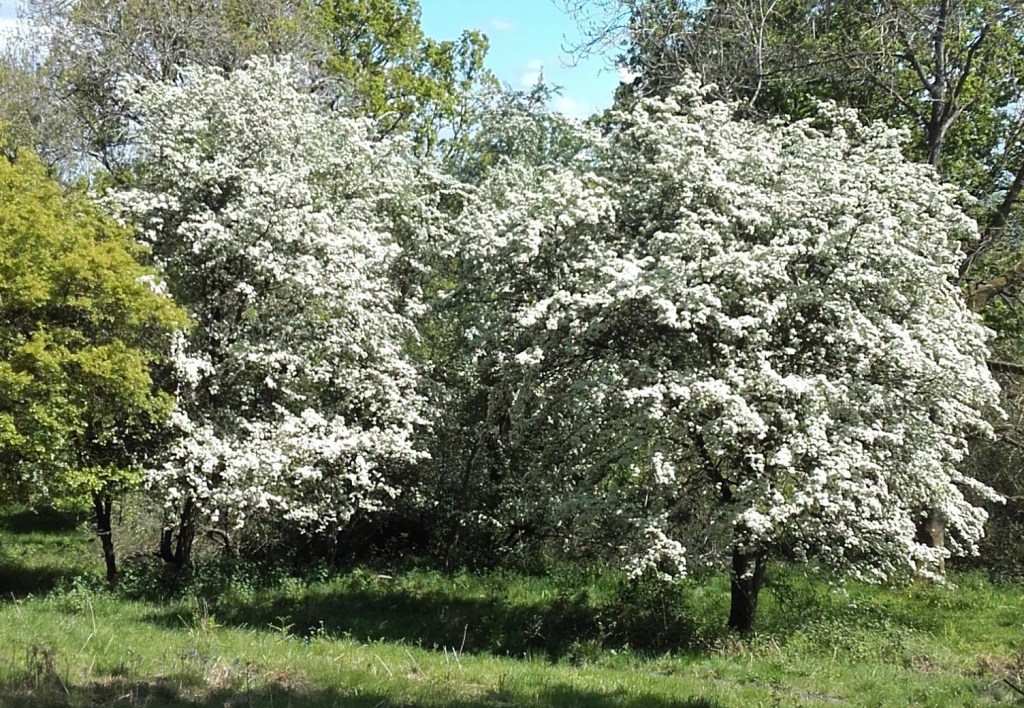
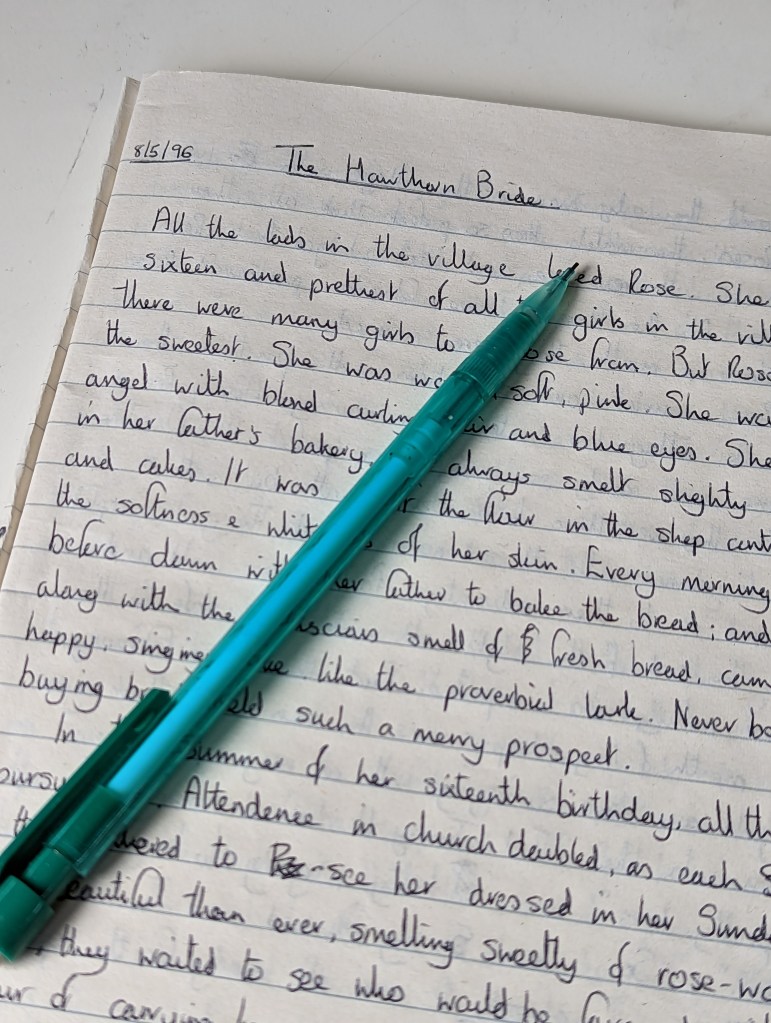
I find these rituals based around the seasons fascinating. They say more about the human psyche than they do about the weather. It is perfectly understandable why humans needed to create a festival of light in the middle of winter, or a celebration at the end of the harvest before the leaner months set in. A big party to celebrate May Day, a double celebration of thanksgiving and future planning, along with the rituals of courtship and fertility that went alongside it, would have been so important to country people in bygone days that lives could be shaped by it. That idea fascinated me so much that I turned it into a novel – my soon-to-be-released novel, to be precise. The action revolves around a May Day Ball in a small village; the anticipation and preparation before the event, the magic of the dancing and the music on the night, and the fall-out and consequences in the aftermath. I’m in the final stages of proof-reading and revision; hopefully, it will be ready for publication by the end of this month. But as today is May Day, a day of such significance within the novel, I thought I would give you a sneak peak of the cover. So here it is – The Hawthorn Bride, coming very soon!

Accidentally Recurring Names

I don’t know if this is a phenomenon that happens to other writers, but I have a bad habit of reusing the same names without realising until it’s too late.

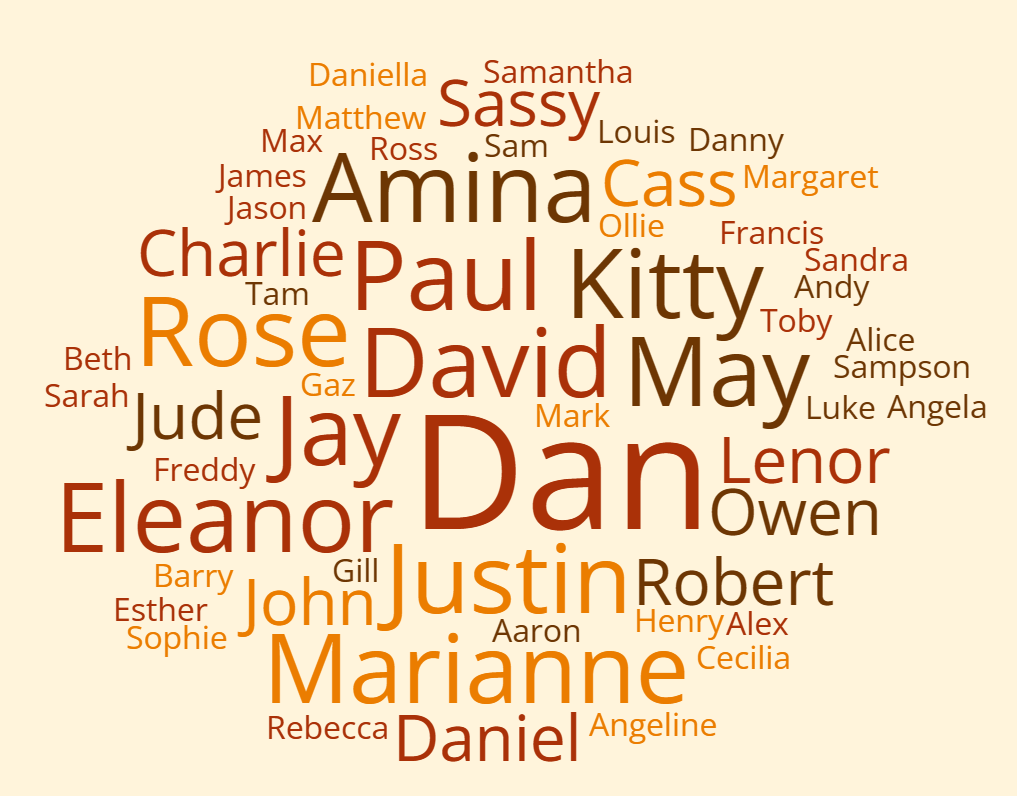
Take the name Daniel. The main character in my novel The Most Beloved Boy is called Dan. I have mentioned before that he is named after a marble that inspired a game I used to play, and the marble was named after a boy at school that I used to fancy. I went off the boy, but I never lost my liking for the name. Later in my teens, when the boy was forgotten and the story passed over, I had a crush on another Daniel, a character in the film The Memphis Belle. I’m not sure why this film has such a huge impact on me, but it did. If you don’t know it, it is about an American bombing crew in WWII, about to make their final mission – if they survive it, they will be the first crew to ever do so, the missions being so dangerous. I became obsessed with this film, and from it, became interested in the poetry of W B Yeats, the history of the B17, the music of Harry Connick Jr, and traditional Irish music, all because my favourite character, played by the actor Eric Stoltz, was an Irish American called Danny. The film used the song Danny Boy to great effect and it is still one of my favourite songs, definitely one of my Desert Island Disks. It must have cemented my fondness for the name. Years later, when I wrote After the Rain, I used it for a subsidiary character. Daniel is the housekeeper’s son at the house where my main character retreats to; he is a quiet, gentle young man who calmly accepts his strange new mistress and teaches her how to look after the garden. He doesn’t play much part in the action, but there aren’t many characters in the novel as a whole, so his presence is notable. There was then a big gap in my writing. By the time I started work on The Most Beloved Boy, over ten years later, I was so excited to bring my Dan and David story back to life that I never thought about the duplicated name. I didn’t even notice until sometime after both novels were published on Amazon. Now, there’s no rule that says you can’t duplicate names, but for the sake of clarity, it seems best to avoid it. But that presented a new conundrum. There was no way my main character in The Most Beloved Boy could be anything other than a Dan; not only have I nurtured him for too long but the name is significant within the plot. However, neither could I bring myself to change the other. It suited him too, and I couldn’t think of anything else as appropriate. And as I said, there’s no rule against it. So I decided to embrace it. Dan stayed as Dan, Daniel stayed as Daniel, and I decided that there would be a Dan/Daniel/Danny etc in everything else I ever write. And so there is. In No Such Cold Thing, there is a Danny with one line. In The Hawthorn Bride, Dan is a dog – short for Dandelion. In the novel I’ve just completed, I’ve gone with Daniella. It can be a fun game for readers.

So far so good, but then, after finishing No Such Cold Thing, I realised I had done it again. In that novel, the main character is called Kitty, but it is short Cecilia. It’s part of the story that she is named after her great-grandmother, who was Cecilia shortened to Cis. But I had already used this name in After the Rain for the sister of my main character. Marianne calls her sister Sissy, but she is formally introduced at one point as Cecilia. It’s a bit of a point that Marianne never shortens her name, unlike her sister. I considered going back and changing it, but Sissy had been Sissy for so long that I just didn’t want to. I decided that the pet versions of each use of the name – Kitty, Cis and Sissy – were different enough, so stuck with them.

After that, I thought it would be a good idea to keep a list of names I could never use again. It can sometimes be quite hard coming up with names. The new novel I have just finished took a long time to get going because I couldn’t decide on a name for the main character. When the right name finally presents itself, you want to be sure there aren’t any other impediments to using it, like having used the name before. However, having found the perfect name for my main character, I then completely overlooked the fact that one of the other characters has a recurring name. This time it’s the name Paul. In The Most Beloved Boy, Squire Paul Waltham is David’s brother and Dan’s nemesis. Actually, he is named after a marble too, and therefore also named after another boy from school. And perhaps that explains the recurrence; my latest novel is set in the 1990s and draws on some of my own experiences of school. In naming my characters, I wanted the names to be appropriate to the period and class status I was trying to recreate; these teenagers were born in the seventies to working class families, just like the kids I went to school with. Naturally, I looked back to names I was familiar with from school. Maybe the same boy inspired my new Paul. It suits him pretty well. But this time, I’ll have to change it. The two characters, though very different, carry the same weight of importance to their narrative, and I can’t risk them being confused. New Paul will have to become someone else. At least I noticed while it’s still in the first draft stage and therefore is easy to change. I have done name changes before so I’m not averse to the idea, even though there is now the challenge of finding another perfect name for him. But more importantly, I am updating my Banned Names List. From now on, I’ll have to pay more attention to it.

Novel Number Six!

In the last twelve months, I have written a few times about the new novel I have been working on. Last March, I wrote about the new experience for me of writing fiction for Young Adults. In the August, in my Summer Update, I mention that my Young Adult novel is taking shape but still feels to be slow-going at Chapter 5. Then at the beginning of January this year, I wrote about getting to Chapter 21 and realising I was stuck, and having to retrace my steps in order to find the right route to where I actually wanted to be. After this detour, progress had been delayed but was back on track.

Well, I am very happy to now report that progress was restored, the fix did work, and as of yesterday, the first draft of that novel is completed! Sound the fanfares, I have now written SIX NOVELS!

Finishing a novel creates a strange mixture of emotions. There is certainly triumph, in the achievement of such an amazing thing. Whether it is good or rubbish, I have created a whole novel, many thousands of words, brand new places and characters, all made up by me and put together into one readable form. It is pretty special being able to do that. There is a certain amount of relief, that I am still able to do this, and that all the time and effort I put into it has finally come to something. There is pride that the story worked, and excitement that it is now in a form that one day can be read by others – I can’t wait to share it with the world. Which of course brings apprehension – what if the world doesn’t like my story, or doesn’t love the characters that I love so much. Then there is an undeniable sense of loss. It’s like reading a wonderful novel for the first time – you want to finish it, to see how it ends, and at the same time, you don’t want it to end because then it’s over. I have been working on this story for such a long time, and I know the characters so well, but now their story is ended. That feels like a strange thing to celebrate. And as for celebrating – I wanted to shout and scream “I FINISHED MY NOVEL” – but I didn’t. It feels too much like boasting. I shared it with my husband and kids, but I didn’t say anything about it at work today, even though I have been asked a few times if I did anything nice over Half Term. Well, yes actually, I finished writing a novel. Nah, I can’t do that.

Well, I suppose I am writing this blog. It’s the closest I can come to blowing my own trumpet.

Anyway, it is just a first draft. I’m far from done with my story and characters, and I already know that quite a lot of it will be rewritten before anyone gets to read it. Part of me would like to start doing that right now, but it needs some time to rest. I need some time away from it, some space to find a new perspective. As much as I love editing, it will be more effective after a break from it. Maybe that’s why I feel so sorrowful – like the ultimate book hangover, it will be hard to drag myself away from it. Luckily, I have a new project to go straight into.

While Novel Six is hibernating, it is time to reawaken Novel Five. This is the novel I wrote in Lockdown 2020. It has been resting since then, hardly attracting my attention at all while I was busy trekking through the submission process, and then writing Novel Six. But now is the perfect time to begin the process of editing and transforming it from work ‘in progress’ to ‘final draft’. My aim is to get it KDP ready and published on Amazon before the end of this year. That really will be something to celebrate.

Watch this space. The Hawthorn Bride, coming in 2023.

Writing – Time Travelling in Action

Work on my latest novel was going so well that at the beginning of November, I was at chapter 21 and thought it would be finished by the end of this year. Progress was flying along, even to the point that I was rushing home from work and hurrying through the evening chores just so I could get a few more pages written. But then, it hit a problem. I realised that the narrative I had been creating was leading me in a slightly different direction to what I had originally planned. This wasn’t necessarily a bad thing. As I’ve been writing this novel, ideas have developed and characters have evolved, giving everything a more satisfying depth. This was a good thing, but it meant my original plan was now too simple for the more complex characters that had emerged. The end point was in sight, but the path towards it was no longer a straight line and there were several obstacles blocking the way. Basically, I was stuck, and work on the novel ground to a halt.

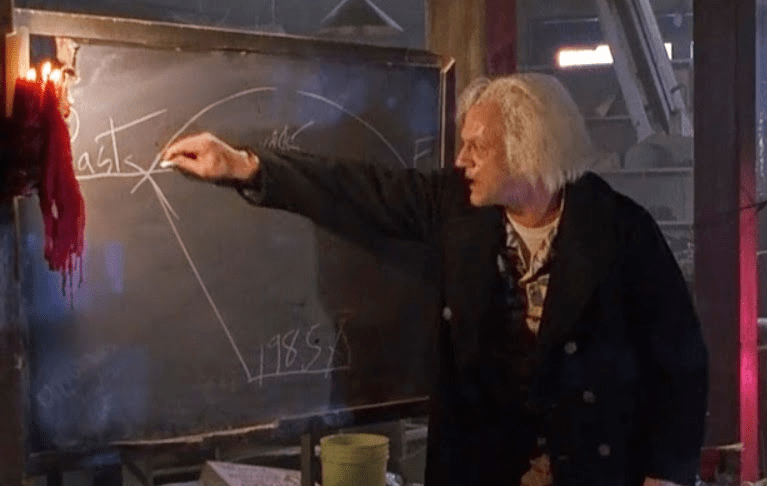
Luckily, in in my recent post Advice for Writers, I had collated a bunch of writing advice from authors that I admired, and I remembered one piece of advice that could help me. I hadn’t included it in that blog because it was about what to do when a novel gets stuck, and I very rarely get stuck. But now I needed it. The advice came from Margaret Atwood, and it was this – “If you’re lost in the plot or blocked, retrace your steps to where you went wrong. Then take the other road.” In other words, go back to a point in the action before thing start going awry and rework from there. I looked at my novel, and started retracing my steps. Frustratingly, I had to go back quite a few chapters, but as I started the rewrite, things started to fall back into place. And yet, it was not quite the same place. It was a darker, deeper place; still travelling in the same direction towards the end point but along a parallel timeline. In the words of Doc Brown in Back to the Future 2, I had interrupted the time continuum, creating a new temporal events sequence, resulting in an alternative reality. That’s one of the best things about writing novels. An author can travel back and forth in time!

   This time travelling has various uses. Sometimes it is simply for exploration. This is a technique I use regularly in the planning stages of a novel; in order to develop the main plot and characters, I jump back in time to think about the events and family history that precedes the action of the novel. I can write whole scenes about the parents of my main characters that will never be used but are indispensable for establishing the details. Or you can jump forward in time and check out the ending, or maybe even the sequels. Knowing what happens next is important.

   Other times, it’s more of a stage management thing, the placing of vital clues or props that will be needed later on. It might be a metaphor to build on a theme, or a piece of behaviour or speech to solidify a character. It feels like cheating, but it’s just editing. It’s why a first draft is just that – a first draft. I can’t even begin to imagine what it was like for those 19th Century writers who published a novel in monthly instalments in magazines; they must have been very confident in their planning!

   And then there are the occasions when a complete rethink is needed. As in this instance, it can be used to completely divert the course of the action. A simple jump back in time, and I put my characters on a different road. The trouble is, I had to jump back quite a few chapters, and that led to some significant rewriting. Then it was Christmas, and there was just too much going on to sit down and put the work in. So I’m still behind where I was, and the novel I thought would be finished by the end of the year still has quite a way to go. But it is now back on track. And with Christmas over, I am confident that I can crack on and complete the first draft. The sooner the better, as I have a lot of other work planned for 2023.

Happy New Year.

King Christmas

This is a poem I wrote on 23rd December 1990 when I was sixteen. Every year I think about sharing it, and usually I chicken out. Well, not this year! I’ll think of it as my tribute to all teenagers – the teenager I was, the teenagers I work with, the teenagers I am currently writing about, and my own children – who have wonderful and valid things to say. I’m not as religious as I was back then, but I still hold with the message, especially as a parent. I admit it’s not your usual jolly, festive post, but Christmas is also a time of dark and quiet, the perfect conditions for contemplation. Whatever this time of year means to you, I hope it is straightforward and trouble-free.

In the city of Christmas Future

The King of Christmas counts his cash

And marks his profit on a graph.

“It’s been a good year,” he chuckles,

Running his fingers through his petty cash;

And sitting on his neon throne

He gazes over his glittering Empire

With the monstrous central standing Icon

That kids of every creed have come to worship;

King Christmas!

Supplier of Robo-Santas and killer Elf dolls,

The parents’ threat for good behaviour,

And their excuse to indulge on greed,

“What’s good enough for Mrs Jones’s kids…”

The cash registers sing in the shops

As all follow the glowing neon statue of King Christmas to his Empire.

In a back street shop of a run-down town,

A boy and his mother stand alone,

Ignored in King Christmas’ Empire,

Shunned by his minions.

The boy spies a battered construction,

A cardboard stable and tatty plaster figures,

A lady with a baby, a kind man standing close,

Shepherds with sheep, kings in riches, ladies with wings,

And he recalls a line of a song his mother sings;

With Angelic host proclaim, Christ is born in Bethlehem,

And asks, “Was King Christmas born in Bethlehem?”

The mother brushes away a silent tear

And shushes her son and hurries him home.

That night, her family sing words from a book of unknown songs,

Hark the Herald Angels sing, Glory to the new born King.

But the boy shakes his head,

For King Christmas is not newborn.

In his grotto of Tinsel,

King Christmas laughs,

Waves his pointy tail with delight

And pushes back his Santa-Hood crown to show his gleaming horns.

He laughs in the face of a weeping God,

Whose humble son means nothing

To the kids who pray for life-sized Rudolphs  

With jet-propelled wheels,

Who spend their Sundays in the Temple of King Christmas’ Toy Shop.

“And so, God,” he cries aloud,

“I win, I win. Hear them sing…”

Hark the Festive Seraphs sing,

Money to the Richest King.

Advent doesn’t need to be expensive…

It’s November again, and you may be looking for exciting Advent Calendar ideas: something the children will look forward to every day of Advent, something special to share as a family, something that will create lasting memories, something that delivers an uplifting Christmas message. You might also be hoping to find all this without breaking the bank this year. Well look no further. Instead of gifts or sweets, choose an Advent Story, ready to print out and cut up to fit in any re-useable Advent Calendar. Follow the link to the Index of Stories, where you will find ten different stories to choose from, catering for a variety of age and tastes. It really is that simple, and ABSOLUTELY FREE.

Advice for Writers

Writing about Hilary Mantel and sharing her wisdom about writing has made me think about all the advice for writers that is available. There is an abundance of it out there – books, articles, on-line courses, interviews, blogs, more books… it is endless. Pinterest is bursting at the seams with it – a rabbit hole I can all too easily disappear down. For someone desperate to write and be published, it can be very distracting.

Obviously, I have read my fair share of it. I find it breaks down into two types. There is the practical ‘Nuts and Bolts’ type, which is literally How to Write: how to structure a plot, how to create interesting characters, how to beat writers’ block, how to finish a novel. In the past, I have found some of it useful. When I was seventeen, I found a book in my college library that was specifically about writing a good plot. At that point, I had written two and a half novels (my ‘juvenilia’) and thought I already knew everything, but reading this book was a revelation to me. I don’t remember exactly what the book was, but it gave me two rules that I stick to religiously.

 1. Don’t switch viewpoints. When writing in the third person, stick to one character’s perspective to tell the story. Don’t tell the reader what one character is thinking, then switch to another character’s thoughts and feelings when it suits the narrative. If that second character’s thoughts and feelings are important to the plot, then you have to find a way to tell them through the first character’s understanding. To me, this is a fundamental rule. Obviously, not all writers agree with this, and I do come across it in fiction, but not from the writers I really admire – just saying.

2. Don’t put Bambi up against Godzilla. Your protagonist has to stand a chance. It makes sense. I once read a science fiction novel by Iain M Banks, which I was enjoying until he killed off ALL the main characters in the final chapter. I had never felt more cheated, and I have never read any more of those books.

Those two pieces of advice have served me well over the years and I recommend them. If you want more advice on how to write a novel, just type it into Google and you can spend the next year reading it. These days, I’m looking for spiritual guidance rather than How To guides. This is the type of advice that comes from established authors, preferably the ones I admire the most. I like to think of it as ‘mentoring’ rather than advice. Luckily, it is also quite easy to find. Besides writing successful novels, the best authors are often called upon to share their writing wisdom. Some of this is the practical day-to-day stuff, such how to stay focussed, or how to avoid getting stuck in a novel that isn’t progressing. It is reassuring to know that even the best authors sometimes have these problems too. But I prefer to read about the mysteries behind writing, the magical alchemy that takes an idea from someone’s mind and turns it into a fully formed novel. Those words from Hilary Mantel – a book grows according to a subtle and deep-laid plan. At the end, I see what the plan was – this is what I love to read, because it resonates with the process going on in my own head. Yes, it is blatant self-validation, but sometimes that’s necessary too. It makes me feel like I must be doing something right. After all the rejections, I really need that. And after all the advice on how to write a pitch for an agent, I also need to remind myself that writing is a mysterious joy that I love doing, not just a business pitch. In researching quotes for this blog, I have refreshed my soul and found new inspiration. This is the advice I want to share, some of it practical, some of it more motivational.

“Forget about inspiration and get into the habit of writing every day. Habit has written far more books than inspiration has. If you want the Muse to visit you, she needs to know where you are: so stay at your desk.” Philip Pullman

“Get disciplined. Learn to rush to your laptop and open it up. Open the file without asking yourself if you’re in the mood, without thinking about anything else. Just open the file: and then you’re safe. Once the words are on the screen, that becomes your distraction.” David Mitchell

“Neglect everything else.” David Mitchell

“Write more. And remember that everyone who writes anything good wrote a lot of bad stuff first.” Neil Gaiman

“Don’t obsess over your first draft…. No one is ever going to see your first draft. Nobody cares about your first draft…. For now, just get the words out. Get the story down however you can get it down, then fix it.” Neil Gaiman

“Any form of human creativity is a process of doing it and getting better at it…[Writers] don’t usually peak in their 20s. It’s usually quite a lot later on. Why is that? Because writing is about people and story is about people, and you know more about people and their stories as you get older … you see more and you experience more.” Margaret Atwood

“A good day is when you’ve written a good sentence.” Anne Fine, as quoted by Kate Atkinson

“Respect your characters, even the minor ones. In art, as in life, everyone is the hero of their own particular story: it is worth thinking about what your minor characters’ stories are, even though they may intersect only slightly with your protagonist’s.” Sarah Waters

“Do change your mind. Good ideas are often murdered by better ones.” Roddy Doyle

“But when people say, Did you always want to be a writer?, I have to say no! I always was a writer.” Ursula Le Guin

“It’s a mysterious process. Of course, part of me must be making them up. But it doesn’t feel like making up – it feels like discovery … It’s a curious business and I’m not at all sure about it, but I don’t want to be sure about it really. I like being in a state of doubt.” Philip Pullman

“I do believe writing for a writer is as natural as birdsong to a robin.” Sebastian Barry

If I had a notice board in front of my desk, I would turn these quotes into posters and stick them up, to remind me of how and why I write. And maybe there is a purpose to it beyond self-validation. The advice from David Mitchell has been particularly helpful recently – and not just making me feel better for having a messy house! Making the effort to open the file and sit in front of it has been very productive – I’m actually at Chapter 20 of my latest novel and steaming towards the climax. Stay tuned for exciting news!

I hope this helps other people too. If anyone reading this has some different quotes from writers that inspire them, I’d love to hear them. In the meantime, I’ll leave you with a quote from the booksellers Waterstone’s – not necessarily advice, but certainly motivational.

Hilary Mantel – a few, inadequate words

Since the death of Hilary Mantel last month, there have been many words written and broadcasted extolling her brilliance as a writer. There is nothing new I can add to the eulogising, but to let the death of my favourite author go by without writing about it seemed amiss. She is someone I have mentioned in a previous blog as one of those authors who I admire so much that reading her novels is both pleasurable and painful; I enjoy her writing for its perfection and brilliance while knowing that I can never hope to put words together in the way that she did. But I would rather live in discontent in a world where her novels exist than live in a world of mediocrity without them. Reading her fiction brings the satisfaction of a good story well-told, and also the chance to witness a master at work. Quite simply, she was a genius.


I first ‘discovered’ her when I read Beyond Black, and knew instantly that it was absolutely brilliant. It is one the creepiest, most sinister books I have ever read. I love the combination of the mundane and the genuinely terrifying, suburban and supernatural rubbing shoulders in a way far more terrifying than any gothic mansion horror could create. The characters are slippery and unreliable, with the living just as untrustworthy as the dead. Evil lurks in this novel. It is unsettling, disturbing, but that is why it is so good.


Having read that, I wasn’t quite so enthusiastic to learn that the novel that followed it was about a real person from history who I knew nothing about. Who was Thomas Cromwell? Hadn’t there been enough novels written about the court of Henry VIII? But then I read Wolf Hall and I loved every word of it. The tricky thing with reading any historical fiction is constantly wondering where the boundary between truth and fiction lies, but I could feel the depth of research behind it; I was confident that if Mantel’s extensive research had led to her admiration of Cromwell, I could feel the same with integrity. But it is not black and white. By the time I read Bring Up the Bodies, I loved Thomas Cromwell as much as the friends and family that surround him in the novel do, but I also find him dark and terrifying. The way he goes after Ann Boleyn is calculated and guaranteed to succeed. It reminded me of a kimono dragon, that bites its prey just enough to poison it, stalks it while it slowly dies, then picks up its meal when the time is right. I don’t think Mantel could have written this without feeling it too. But that is the genius of the work, this creation of parallel opinions that both contradict and work together. When I finished The Mirror and the Light in 2020, (the best thing that happened during lock-down) I was utterly devasted and could barely see the words on the page through the tears as I sobbed my way through the closing chapter.


Since her success with the Cromwell Trilogy, there have been plenty of opportunities to read and hear Mantel speak about her work. I am sure I am not the only aspiring author to have lapped up her words, looking for clues to the magic ingredient that made her fiction so brilliant. Of course, her genius was unique and can’t be learnt, but some of the things she has said about the writing process resonated with me like a shared experience. For example, she once said “A book grows according to a subtle and deep-laid plan. At the end, I see what the plan was.” This is exactly what it feels like to me when I am working on a first draft of a novel, or even a second or a third. I know how a story is going to go, but sometimes is surprises me how it gets there. Not everything works out the way I thought it would, and yet when things change, I know they are right. In another quote from Mantel, “Not only did I think of it but it seemed to me to be true.” That sums up the alchemy of writing, making things up but at that same time feeling like they existed all the time, waiting to be discovered.


These comparisons between myself and Mantel are purely about the process of writing – I would never compare my work to hers. But I wanted to share these quotes because I am currently at this stage in the novel I am currently working on. Things I thought were going to happen are not quite fitting in, but I am happily letting it take its own course, trusting that it will reach the planned conclusion in a way that is better than I originally planned. Writing fiction is a startling and unpredictable game, which can be both frustrating and addictive. That’s why it was such a blessing to the world of literature to have an author like Hilary Mantel who could do it so well.

Summer Update

Ok, so it’s been five months since I last posted, and I’ve been feeling somewhat guilty about my lack of content. I also don’t want people to think this site has gone completely dormant, so I thought I’d write a quick post to keep things up-to-date and prove that I am still active – though by activity, I mean no more than the twitching tail of a sleeping cat that lets you know it’s still alive!

You see, that’s the trouble with writing; it isn’t always the most scintillating pastime to share. This year has been particularly quiet. I haven’t undertaken any major editing projects, which has kept me busy in previous years. That always feels very productive and exciting but there has to come a time when you leave the editing alone. Then there was last year’s big project of submitting to agents. My plan had been to continue, but somehow, I never did. After a year of rejections, the futility was starting to get me down. I haven’t given up, I will get back to it, but it has been refreshing to forget about that side of things for now. At least that has given me more time for actual writing. I am still plodding on with the Young Adult novel that I started. It is on the brink of taking shape, and I am hoping that by the end of this summer holiday, I will have got a few more chapters written. I have the time, but I’m a little lacking in motivation. I keep thinking that I just need to get it to a point where the action starts hotting up, and then I won’t be able to stop. However, I’m five chapters in, and if it doesn’t feel exciting now, then how exciting will it be for readers? Really, I should just cut to the chase – forget the exposition and character development, get stuck into the drama. Alright, now I know where to start tomorrow.

Alongside this, I have been reading. I discovered an author that was new to me – Anthony Doerr, author of Cloud Cuckoo Land, which I really enjoyed. Then I took on the challenge of reading more Dickens and have just finished Little Dorrit, which was an absolute joy. I also have a pile of books by favourite authors that I have been meaning to read for ages, novels by Sebastian Barry, Kate Atkinson and Jim Crace, and some non-fiction, by Robert Macfarlane, Bill Bryson and Philip Pullman. The recent heatwave in the UK has been perfect for reading – when it’s too hot to do anything else, there is nothing better than sitting very still with a good book.

Summer holidays are always my time for reading, but I have also been trying something new this summer, writing poetry. I love poetry, even though I don’t read a lot of it. And I haven’t written it for a long time, not since the angst-ridden days of my youth! But I do still think about poetry that I would like to write. I have seen it recently described as ‘the words at the back of the mind’, and I love that, as it quite accurately matches the way I think, always looking for the perfect words to sum up a moment, or to capture a feeling with nouns, adjectives and verbs. So I decided to set myself the task of actually writing down some of this ‘thought poetry’. On our recent camping holiday, I kept a notebook close to hand, and by deliberately making the time to stop and jot down my thoughts and observations, I created a little memoir of the holiday in poetry form. It was an interesting exercise, and whatever the quality of the writing, I was pleased to have kept it up all through the week. It’s certainly not something to share yet, but I’m hoping that in a month or so, I can read it back and still feel the moment that inspired me to put pen to paper, and maybe develop those ideas and themes. If nothing else, it will be a nice record of a lovely summer holiday, and also maybe an encouragement to do it again.

So that’s where I am at. And now it’s time to stop making excuses. I need to put some thrills into Chapter 6. 

Teen Fiction vs Young Adult

The novel I am currently developing is a change of direction for me. There is no rural setting; the action takes place around a suburban housing estate and a secondary school. It is set no further back in the past than the 1990s, which does not count as a historical setting. And my main characters are teenagers, not adults. Does this mean (voice drops to a whisper) I am writing Young Adult fiction?

The Young Adult market is a massive phenomenon that I know little about. Some on-line research suggests that it started to become a serious genre in the first decade after the millennium. This means I missed it as a reader because I was too old, and also as a bookseller because I had left before it made it big on the shelves. Neither have my own children been particularly into it. Looking through bestseller lists and suggested reading recommendations, there is a wealth of high quality and thought-provoking fiction, with lots of publications that are considered “classics” of the genre. Young Adult is now a respected and lucrative element of fiction. As a passionate reader, I am, of course, delighted that so much is being done to encourage young people to read, and glad that the publishing industry has recognised that teenagers deserve high quality literature just as much as anyone else. It’s certainly something I feel I missed out on at that age.

I was a vociferous reader all through my teens, and yet when I look back on what I was reading, it makes my toes curl with shame. Between re-reading my favourite children’s books, I read some absolute rubbish. But the mediocrity of my literature choices reflects on the lack of options there were back then. Young Adult wasn’t a thing, only “teen fiction”, which tended to be mass-market produced romance. I read a few of the “Sweet Dreams” series, with the classic formula of Girl meets Boy, Girl hates Boy, Girl changes mind about Boy, Girls ends up with Boy, all sealed with a kiss on the last page. I read them willingly enough but with an awareness that they weren’t really any good. I liked something a bit spicier, like Virginia Andrews. Back then, novels like Flowers in the Attic and Heaven were published as Adult Fiction, probably because of the sexual content – that’s probably why so many teenagers like me read them. I also liked a bit of Aga Saga, picked up from my mum, and historical fiction, such as Sharon Penman’s Here Be Dragons. Then I discovered Fantasy and devoted myself to authors such as Tad Williams, David Eddings and R A Salvatore. Looking back on this now, I see that it was all pretty formulaic and rather disappointing as literature. Nor does any of it reflect my own experiences, as ordinary teen living an ordinary life.

So it is great that teens have such an amazing choice these days. And yet, I still feel a bit reluctant to label my new novel as Young Adult. Yes, it has teenaged protagonists, and yes, it is a “coming of age” story. But to me, that’s not what it is about. In all my fiction, I want to write stories about people, and it just so happens that this time, the people are young and living in a time period that I lived through myself. That isn’t meant to make it more accessible to just one group of readers, or exclude others. In the same way that I will ignore labels and read anything, I want my writing to work in the same way. If I do the job right, there isn’t anyone who shouldn’t enjoy reading my new story. So I’m not sure I would want it published as a Young Adult novel, even if that meant opening my work to a whole new market – not so great if that put off other readers. Why shouldn’t adults read books about young people – after all, we have all lived through our own ‘coming of age’, and even if it was a long time ago, we can still relate.

However, while this is definitely not an attempt to get a foot in a new market, I will admit that there is another agenda behind my choice of characters and subject matter. When I wrote my children’s book No Such Cold Thing, it was out of a desire to write something my own children could read. Now my children are older, maybe I am writing something that will continue to appeal to them. And not just my own off-spring. I work in a school with children aged between ten and eighteen. They don’t know that I write novels, and I suspect if they found out, they wouldn’t want to read them anyway – there’s way too much boring history, and the characters are practically middle-aged! But it would be different if I had a novel about teenagers. That would be relevant to them, and maybe even a tiny bit tempting to read. It’s not that I’m trying to be cool or impress them, but it would be nice to engage with them in a subject that I love. After all, I like working with young people, and the more I get to know them, the more interesting they become. They might even inspire more novels!

I must stop now, before I go off on flights of fancy about being discovered as the TA who wrote the bestseller that all the kids are talking about, and my novel making it onto school reading lists. I haven’t even written the novel yet.